Tuesday, August 28, 2012

Salt Lake City: I Found My Great Grandmother At The Family History Library


Family History Library

Have you ever wanted to be a detective, using clues to solve mysteries? Ever since I began watching History Detectives on PBS, I have thought it would be an interesting career. But you don’t have to have a job as a detective in order to be one. I found out in Salt Lake City that you can be a sleuth right in the privacy of your own home.

Years ago, official documents were handwritten like this birth certificate from 1880. None of the documents in this blog entry are from my family, but I did find them at the Family History Library.
Governments collect information, and they keep careful and detailed records. As an example, when you are born you receive a birth certificate and your birth becomes part of the public record. The same is true when you die. Military records are another source as are census forms. In fact, our government has over 4,000,000,000 documents in the National Archives. Most document records were kept on paper, while others made their way onto microfilm or microfiche. In years prior to the digital age, if you wanted to search for a birth record in Massachusetts, you had to go to Massachusetts or write to the state and request information. Now, however, these government records are in digital format and are available online. And you can access them from home.

You can better understand your own life when you learn about your ancestors. A piece of every one of them is part of who you are. Most of us know who our parents are and also our grandparents. Beyond that, it can be hard to tell. Of course, you can ask your parents and grandparents for information, but many don’t know or they have forgotten or perhaps they have information that isn’t completely accurate. 

This ship manifest lists all ship passengers and provides a lot of information about the immigrants coming into Ellis Island for processing. It lists names, country of origin, and so on.
Unless you are a Native American, your ancestors came here from somewhere else. During the great wave of migration, one set of my great grandparents arrived by ship in America in the late 1800s. My niece recently sent me a copy of the ship’s manifest showing my great grandparents’ arrival from Germany at Ellis Island in New York. She found it on the Ellis Island website, an easy place to being searching for information about your family. And because the ship’s manifest document was in digital form, my niece was able to print hard copies for her family records and for me. 

Every ten years the United States government counts all of its citizens. This page from an old census book lists everyone who lived at a particular address along with their ages and occupations. I found the record for my mother's family from 1920 when was was still a baby and again in 1930 when my mother was twelve.
A number of years ago, my parents gave me copies of photographs of many of my ancestors, but they knew very little about them. While I was in Salt Lake City, I decided to go to the Family History Library for help in finding out about some of my family history. I was surprised to learn that the library provides free access to its vast resources, and volunteers are there to help you get started. I only had an hour to spend, but in that short time I found my great grandmother! All I knew was her name and that she possibly was from Massachusetts. The volunteer asked me when my great grandmother was born, but I did not know. She asked if I knew when my grandmother, my great grandmother's daughter, was born. I said it was in 1882. The volunteer suggested that I search census records for 1870 because my great grandmother probably was listed in that census. Within a few keystrokes, I found the document showing that my great grandmother and her brother lived in a small town in Massachusetts in 1870. And now I also know the name of my great grandmother’s brother. Prior to this I had no idea that my great grandmother had a brother. The volunteer next had me enter the names of each of my grandfathers, and a quick search returned two documents. Was I surprised to see my grandfathers’ signatures on the documents! I made copies to take home with me. Then, the volunteer showed me how to use the online resources when I get home. And she said that if I need more help, I can go to a center near to my hometown where volunteers will guide me. As soon as I get back home, I am going to become my own history detective. I cannot begin to imagine all that I will find. Now that I have found my great grandmother listed in the 1870 census, I may be able to find her in the 1850 census. And because in 1850 my great grandmother would would have been only six years old, it is likely that I will find out the names of her parents and any other siblings because all members of a family are listed together in census documents.

When a person dies, the death is registered and a death certificate is issued. Generally, you need this document to make a claim on life insurance.
What would you like to know about your family? Did your great-great grandfather serve in the Civil War? Did your great grandmother come to America from Italy or France or Germany? If you want to find out, begin by visiting this website: www.familysearch.org. In addition to searching online, the site lists centers where you can go for help. I found one that is only twenty miles from my house.

This is an example of a draft registration card from World War II. While I am not related to this person, I was able to find copies of the ones my grandfathers filled out complete with their signatures.
Happy sleuthing and don’t be surprised if you find something amazing.

Monday, August 27, 2012

Salt Lake City: The Great Salt Lake and Antelope Island


If you look at this map of the United States, you will readily see the Great Salt Lake in Utah, the largest lake in the US west of the Mississippi River. Only the Great Lakes are larger. But this was not always so because the Great Salt Lake is a small remnant of the huge Ice Age Lake Bonneville, which encompassed 20,000 square miles. By comparison, the Great Salt Lake today comprises only 2,000 square miles. Still, it is massive enough that the entire state of Rhode Island and the Hawaiian Island of Oahu could fit inside the lake with room to spare.

The Great Salt Lake
Most lakes contain fresh water, but because it has no outlet, the Great Salt Lake is filled with water so salty that in some parts the salt content is 25%. Imagine filling a glass ¼ full of salt and then adding water to the top of the glass. The lake is divided into three parts--the southern arm, the northwest arm, and the northeast arm. Because it is so salty if you swim in the Great Salt Lake you can easily float. Some folks look like corks as they bob about in the water. 4.56 billion tons of salt are dissolved in the lake with about 2.2 tons of salt—about as much as would fill 70,000 railroad boxcars—added each year. Salts and other minerals are carried into the lake by three rivers and smaller streams that empty into the lake. Salt settles to the bottom of the lake and over time  can create large crystals like the one in the photograph below. 

Salt crystal from the Great Salt Lake
Situated in the Great Salt Lake is Antelope Island, named for the antelope that once roamed there.  It is the largest of the ten islands located in the lake, and is now a state park. Two-thirds of the island is formed of gneiss, a hard metamorphic rock that is about 2.7 billion years old, ten times as old as rocks from the age of early dinosaurs. 

Gneiss (pronounced as "nice") is a metamorphic rock with bands of minerals clearly visible.
Rock formations like this are common on Antelope Island.
For more than 100 years, bison have lived on Antelope Island. At present the population numbers between 500 and 700. Each year the bison are rounded up and checked by veterinarians. And to thin the population about 150 bison are auctioned each year. Otherwise, they roam freely. In addition to the bison, millions of native birds, including waterfowl reside there. And what about that salty water? Fish cannot survive in the lake because the water is too saline. But the lake is filled with tiny brine shrimp, an important component of the ecosystem that serves as food for the billions of brine flies that swarm around the lake, sometimes forming a black cloud. While adult brine flies live for only a few days they are the primary food source for the birds. In addition, dozens of species of bacteria, protozoa, and algae thrive in the lake. More than 400,000 acres of wetlands around the lake’s shore provides important nesting grounds for the multitude of birds that live on the island. Some of the species of birds that are dependent on these wetlands are the bald eagle, peregrine falcon, eared grebe, California gull, white-faced ibis, American white pelican, tundra swan, western sandpiper, snowy plover, American avocet, along with huge numbers of geese and ducks.

If you look very carefully, you can see tiny brine shrimp in this photograph. They are the small white creatures near the center and bottom.
This sign warns motorists to stay on the road and to keep away from the buffalo.
Some buffalo on the island form herds.
Others wander about alone.
Antelope Island is a Utah state park and is now accessible by automobile on a seven-mile causeway to the island.

Seven-mile causeway to Antelope Island
The Great Salt Lake at sunset

Sunday, August 26, 2012

Salt Lake City

Look at this logo representing Utah, our 45th state. What does it tell you? Yes, Utah has mountains and is known for snow skiing. In fact, the 2002 Winter Olympics took place in Utah in and around its capital, Salt Lake City. Utah has almost 3,000,000 residents and 80% of them live in the Salt Lake City area along the Wasatch Front. But Utah and Salt Lake City are known for much more than sports and recreation. Nicknamed the Beehive State, the people of Utah admire industriousness. And because of their hard work, Salt Lake City grew and thrived.


The photograph below shows Salt Lake City and the surrounding mountains. The city was named for the Great Salt Lake, the largest lake west of the Mississippi River. It is easy to find on a map of the United States.


What does transcontinental mean? Trans means across, so transcontinental means stretching from coast to coast across this great country of ours. Our nation's first transcontinental highway, the Lincoln Highway cut through Salt Lake City giving it the nickname Crossroad of the West. Mining booms--the largest copper mine in the world is located right outside Salt Lake City--and the building of the Transcontinental Railroad helped Salt Lake City grow. Today it is the industrial banking center of the United States.


Prior to the arrival of American settlers, native tribes lived in the Salt Lake area for thousands of years. Then, in 1847 a group of Americans seeking religious freedom made the trek across the country to establish and settle in Salt Lake City. Some were so desperate to come that they put all of their belongings in handcarts and pulled them across the country. The statue above commemorates these rugged individuals who walked hundreds of miles to reach their new home. As I traveled to Salt Lake City in an air-conditioned car across miles and miles of desert land, I found it a bit tiring. Then, I tried to imagine what it would be like to walk the entire way in the hot sun while pulling all of my belongings in a handcart. I do not believe I would have the stamina. Would you?

The first place I visited was Temple Square in downtown Salt Lake City. I was struck by the profusion of flowers; they were everywhere. 


The two buildings above comprise part of Temple Square. The one on the left with the shiny domed roof is the Mormon Tabernacle, a type of church. Perhaps you have heard the Mormon Tabernacle Choir sing. Their beautiful voices blend together perfectly. The large granite structure on the right is the Temple, built in the 1800s over a forty-year period. Also in Temple Square is Assembly Hall built from leftover granite after the Temple was finished. You can see Assembly Hall below. It was completed in 1880, and originally the tall spires did not have the white caps because they were chimneys.


In the mid 1800s, before Utah became a state, it was a U. S. Territory. During this time Brigham Young served as governor and lived in the Beehive House. In addition to living quarters, his home had a room called the Clerk's Office. It was used to house government records. Also, the telegraph--the main form of long distance communication at that time--and the post office were part of the Clerk's Office.


Beehive House
Imagine writing letters  or doing your schoolwork on this old typewriter. It sat on the desk that had served as the Clerk's Office.

Bathrooms are a modern convenience, and the Beehive house had none. Prior to homes having running water, people used large  water pitchers to fill basins to wash themselves. And, because there were no toilets, people used chamberpots like the ones you see here on the floor. Each day the chamberpots had to be emptied. Would you like to have that chore?

After I left Temple Square, I made my way across town to visit two interesting sites: Red Butte Gardens and the Utah Natural History Museum. Both are situated on the University of Utah campus. As I walked to the garden I saw a sign reminding me to watch out for rattlesnakes, and while in the garden I saw a couple of rattlesnakes, but these weren't live. 

This sign was not a joke. Rattlesnakes love the terrain in and around Salt Lake City.

I saw a few rattlesnake fountains like this one. Can you see the stream of water shooting from the snake's mouth?

See if you can find the snake in this shady rest area. Where are the fangs? The snake's tongue?


As a gardener, I loved my visit to Red Butte Garden. I couldn't help but wonder why my own flower beds don't look as beautiful considering how much work I put into them. When I left the garden, I walked across the street to the Utah Natural History Museum where I viewed a variety of interesting exhibits.


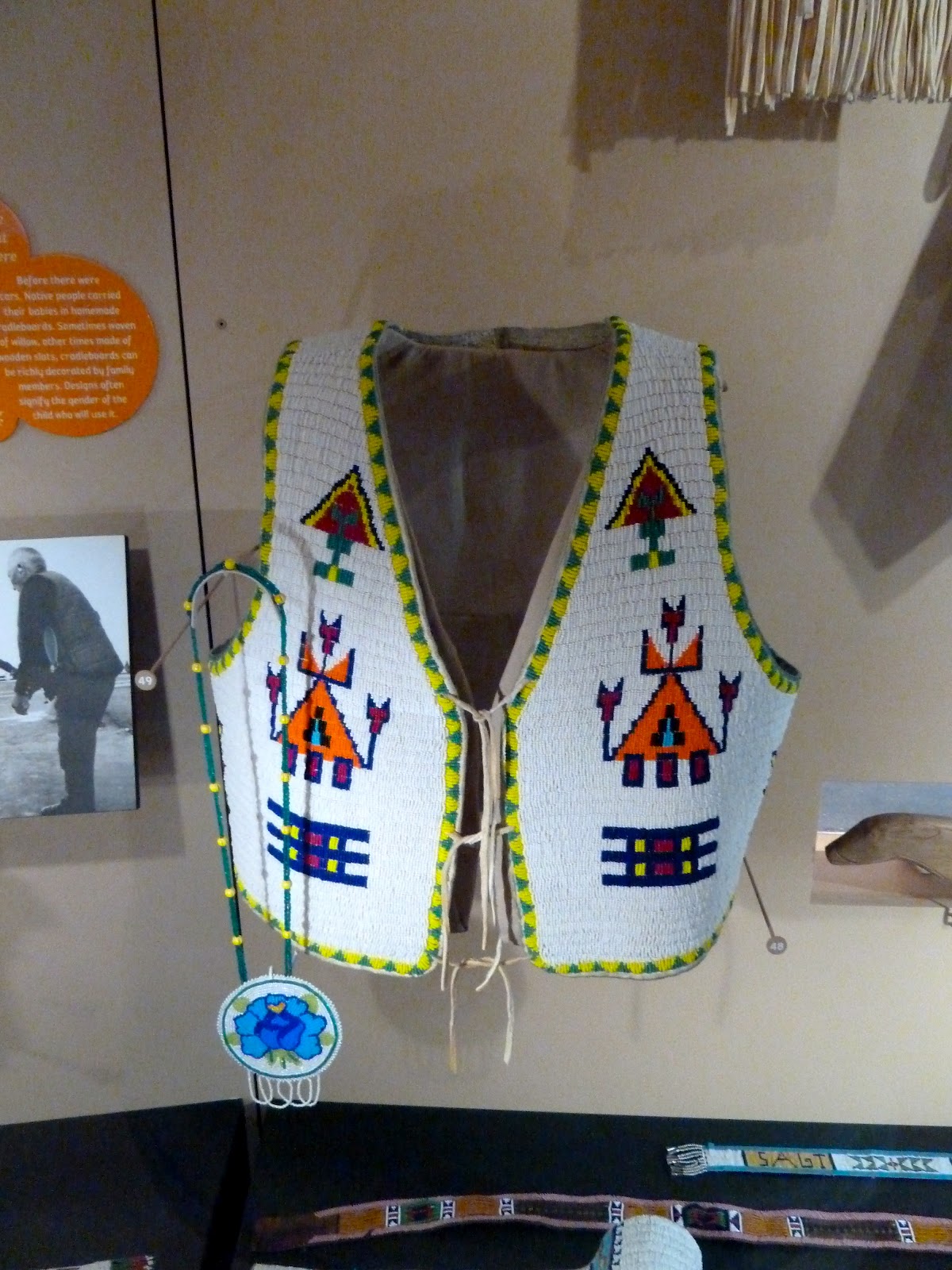
An entire floor of the museum was devoted to the native cultures who lived here prior to the arrival of American settlers.

There are 523 kinds of minerals found in Utah; at least that is how many have been identified so far. The diversity of minerals is amazing, and some of them are found nowhere else in the world. Here is a specimen of aragonite, a carbonite mineral.

This big boy was a distant relative of the alligator that lived 73-80 million years ago. He was so huge that he was about as long as a school bus. Imagine running into something like that! His scientific name is deinosuchus hatcheri.

If you like dinosaurs you might like this beast. He, too was about as long as a school bus and weighed 4,400 pounds. Those teeth are many inches long. Chomp.

Like many modern science museums, this one has a Paleontology Preparation Lab where workers carefully extract fossils from matrix materials. The work is tedious and time consuming.

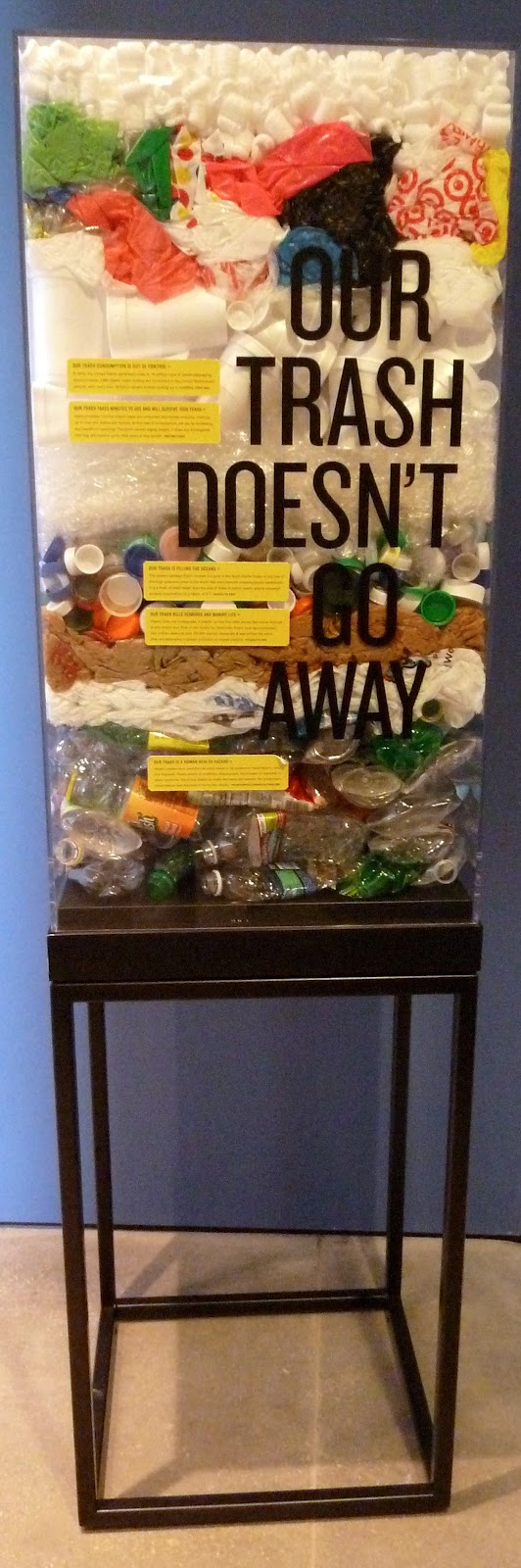
As I was leaving, this exhibit caught my eye.
I was shocked by what I learned, and I hope you are, too. All of us must take proactive steps to remedy this problem. Here are some amazing statistics I learned from the exhibit above: 
  • In 2010 we used 28,000,000,000 pounds of plastic packaging. 
  • Every second in the USA 1,500 plastic water bottles are tossed out. 
  • Those pesky plastic bags we get at the grocery store (if we don’t take our own reusable bags or request paper) are a huge problem. 
  • We send 1,000,000,000,000 plastic bags per year to landfills or other dumpsites. 
  • Of course, the earth cannot “digest” plastic, as it does not biodegrade. One plastic bag will last up to 1,000 years. 
  • Trash is filling our oceans, so much so that in the Northern Pacific, there is a mass of trash that is larger than the state of Texas! 
  • Every year 1,000,000 sea birds and 100,000 marine mammals and sea turtles die when entangled in plastic pollution or when they ingest it. 
Please think about this the next time you go to the store or reach for a bottle of water. I cannot imagine what Earth will be like if we continue this unabated. What steps will you take to do your part to save our earth?


Tuesday, May 29, 2012

St. Louis: Jefferson National Expansion Memorial

Gateway Arch


Established in 1935, the Jefferson National Expansion Memorial is located in St. Louis near the point where Lewis and Clark embarked on their expedition in 1804. The park commemorates important aspects of American history including the Louisiana Purchase, which doubled the size of the United States, westward expansion into the newly acquired territory, and issues related to slavery brought to the fore by the Dred Scott case. There is much to explore here, and it can take a day to see it all: The Gateway Arch, Museum of Westward Expansion, and the Old Courthouse.

The Old Courthouse. Scaffolding is in place for needed renovations.

In St. Louis’s early days court was held in various locations—a Baptist church, a tavern, and an old Spanish fort. Civic leaders decided it was time for a proper courthouse to be built. Construction began in 1826 but because of delays was not completed until the dome was added in 1862. At one time, the Old Courthouse was the tallest structure in the city. Over it’s long history, it served as the seat of at least two important trials.

Dred Scott was not famous until the end of his life.
 
The first was the Dred Scott case in 1846. It serves as a dramatic example of when courts get it wrong. Scott was a slave who sued for his freedom because he had been held in bondage in a location where slavery was outlawed. His master had taken him across the river to Illinois where slavery was forbidden. At that time it was often the case that a slave became free when his master took him into free territory. In 1850 the court ruled in Scott’s favor, but his owner appealed the decision. The State Supreme Court then found for the slaveholder. Chief Justice William Scott (no relative of Dred Scott) reversed the lower court ruling and stated that Scott would always be a slave. Dred Scott then appealed his case to the Supreme Court of the United States. In a shocking decision, Justice Roger B. Taney stated that slaves could not be considered citizens so they could not sue for their freedom. He went on to say that slaves were nothing more than property that can be freely bought and sold. This ruling hastened the outbreak of the American Civil War. At its conclusion, slavery in the United States was banished.

This plexiglass model shows both the Old Courthouse as it stands today after many renovations and also its original structure. Look closely and you can see the older building in brown.
Virginia Minor was a leader in the Missouri suffragette movement.
 
A second significant trial begun in the Old Courthouse also ended up in the US Supreme Court. And again, the courts got it wrong. In 1872, Virginia Minor was a Missouri citizen who helped found the women’s suffrage movement there. When she attempted to register to vote, she was denied. Using the 14th Amendment as the basis of her claim, Mrs. Minor sued. She argued that women were guaranteed citizenship and voting rights. Both the lower court and the State Supreme Court ruled against her. Mrs. Minor then took her case to the US Supreme Court. In 1874 the court unanimously ruled that “all citizens of the United States were not invested with the right of suffrage …” and that “the Constitution of the United States does not confer the right of suffrage upon anyone …” The court went on to rule that individual states have the right to decide who can and cannot vote in elections held within state borders. It was not until 1920 that the 19th Amendment was ratified granting women the right to vote. It is a right that should be taken seriously. It is also a responsibility that citizens should act upon. 

Both Dred Scott and Virginia Minor bravely fought for the rights of Americans. Their cases nudged America forward and helped redefine both citizenship and civil rights. Today all Americans should appreciate these hard fought and hard won battles.

St. Louis: Gateway to the West


For ease of transportation, St. Louis was built on a river … not just any river, but the mighty Mississippi.
Find St. Louis on a United States map and look at all the land to the west. What would you have found there in the very early 1800s? If you guessed only wilderness and native settlements you would be right.

Located on the Big Muddy—the Mississippi River—at one time St. Louis was the most westward city in the United States. Serving as the last stop for gathering supplies on the way to the west, it is where Lewis and Clark embarked on their two-year exploration expedition. Because so many travelers set off from St. Louis, it became known at the Gateway to the West. To commemorate this, a nationwide design competition was held in 1947-48. The goal was to create a national monument on the banks of the Mississippi River in downtown St. Louis. Famed Finnish-American architect Eero Saarinen designed an arch and won the competition. Construction began in February 1963; twenty months later it was completed at a cost of $13,000,000. Open to the public in mid 1967, a specially designed tramway system leads sightseers to the top.

The Arch nears completion.


To get to the top via the tramway, a visitor must squeeze into a small capsule containing five seats. My friend described the experience as riding in the tub of a washing machine. As I rode to the top of the arch, I was glad I am neither claustrophobic nor fearful of heights. The cramped ride was worth it though because the view from the top was exquisite. Each year, over 1,000,000 visitors ride the tram to the top because the Arch is one of the most visited sites in the United States. On a clear day you can see thirty miles away!  


At 630 feet high, the Gateway Arch is the tallest monument in the United States.
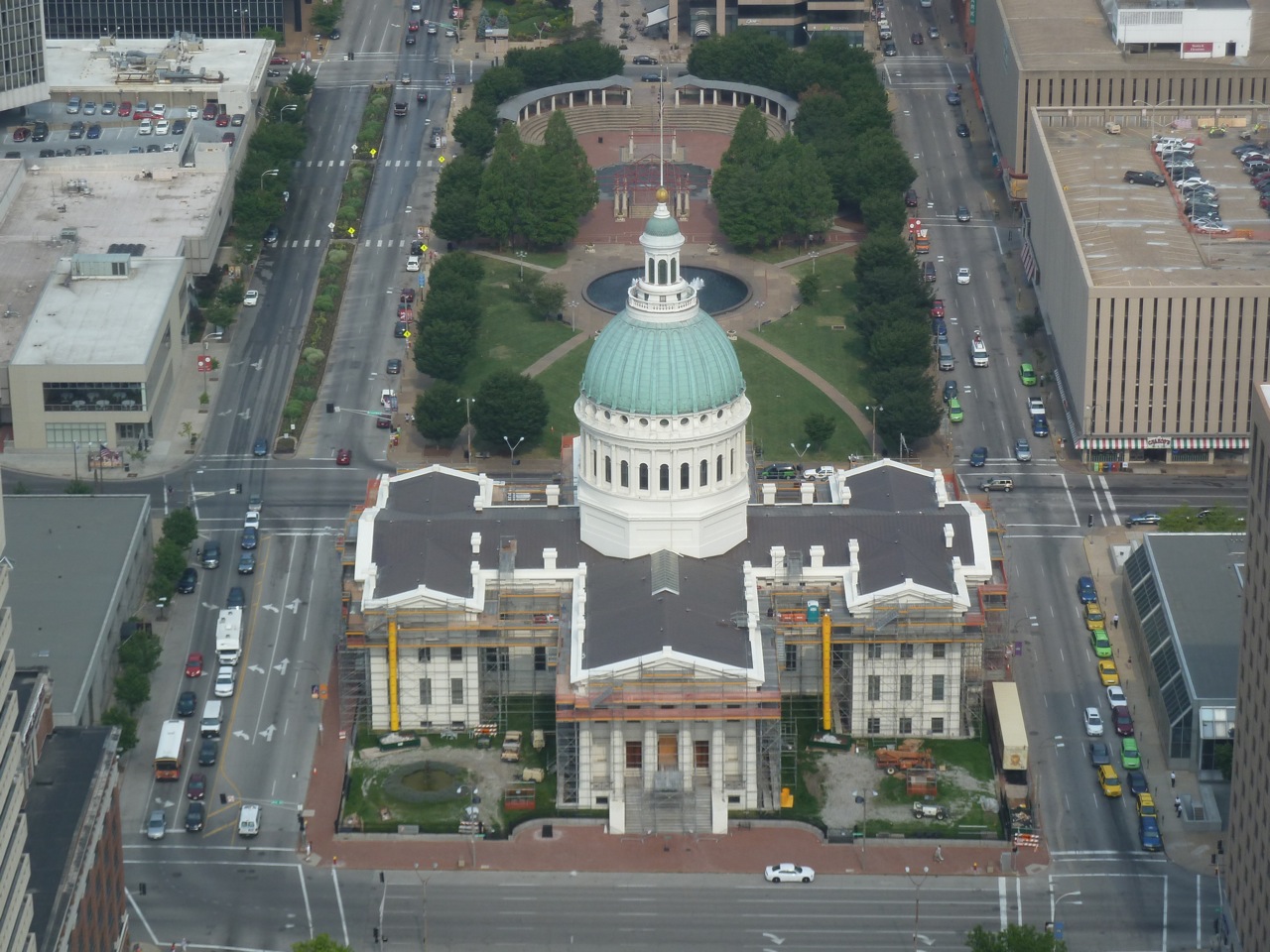
A view from atop the Arch. The building in the center of the photo is the Old Courthouse.
 
There are many interesting facts about the Gateway Arch and its construction. The Arch has foundations sunk 60 feet into the ground to provide ample support. Weighing 17,000 tons, more than 900 tons of stainless steel was used for the exterior. The Arch is composed of 142 equilateral triangles, and in an emergency more than on thousand steps allow maintenance workers access to the top. Carefully designed, the arch can withstand earthquakes and high winds. While it will sway up to an inch in 20-mile-per-hour winds, the Arch can safely sway as much as 18 inches if winds reach 150 miles per hour. 

Another view from the top of the Arch. Here you ca see Busch Stadium where the St. Louis Cardinals play baseball.
As you drive around St. Louis, the Gateway Arch is clearly visible and serves as a constant reminder of the importance of this river city to the exploration and expansion of the United States. It also helped me know exactly where the Mississippi River cuts through the city.

Thursday, May 24, 2012

Chicago: Chi Town or Chicagoland?

As is true for many cities, Chicago has more than one nickname. Some people call the downtown area Chicagoland, while others call it Chi Town.


When you visit Chicago, the locals will tell you there are two things you must eat—the first is a Chicago hotdog and the second is a Chicago deep-dish pizza. Both were developed in the city, and its residents cannot get enough of them. The entire city is dotted with restaurants proclaiming they have the best pizza and/or hotdogs in town.

Chicago Dog ... Hold the ketchup!
 
The first, a Chicago dog, is a steamed beef frankfurter served on a poppy seed bun. The hotdog is slathered in yellow mustard and then topped with chopped onions, a spear of dill pickle, sweet pickle relish, chopped tomatoes, pickled peppers and a sprinkling of celery salt. When placing your order, you simply ask for a hotdog dragged through the garden. And you must, never EVER ask for ketchup on your hotdog. This is a big no-no. In fact, many restaurants will refuse to serve ketchup so that you cannot ruin what they consider to be perfection. 

Do you think this pizza looks like a cake?
The second delicacy, Chicago deep-dish pizza, is sometimes called stuffed pizza. When you think of pizza, you probably envision a thin crust covered with tomato sauce and cheese with toppings added last. But Chicago pizza is a bit upside down from that. In the early 1940s a Chicago restaurateur decided to create a pizza that would require his patrons to use a knife and fork. He used a large cake pan to make the cornmeal and olive oil crust with an edge a couple of inches high. Then he cooked the crust until it was crispy. Deep inside the crust he piled toppings--often onions, peppers, and sausage. Next he layered cheese over the toppings before covering the entire pie with tomato sauce. A finished Chicago-style pizza looks a bit like a cake, and it does require a knife and fork to eat. When I was in Naples, Italy where pizza was invented, I learned that in Italy pizza is mostly about the thin crust with only a smear of tomato sauce and a sprinkling of spices. I wonder how native Italians would react if they were served a Chicago-style pizza.

The late great Muddy Waters
Another Chicago specialty is blues music. You can quickly recognize it because of the strong combination of an amplified guitar and a loud harmonica. It also might include a heavy rolling bass guitar line, piano, drums, and trumpet or saxophone. Singers belt out the sad music whose lyrics are often so forlorn they might bring a tear to your eye. While blues music originated in the Deep South, it was brought to big cities in the north when African Americans migrated there seeking work and a better life. And in Chicago, the musicians put their own spin on it. There were many early important Chicago blues musicians, though the tradition continues today. Chicagoans are well familiar with names like Muddy Waters, Koko Taylor, Willie Dixon, Howlin’ Wolf, Elmore James, and Buddy Guy, all of them blue greats. Click on the link below to hear Howlin' Wolf sing Smokestack Lightning.


The Chicago River and canal system snakes through the city.
Another interesting Chicago feature is the river with two branches that makes its way through the city. The river is represented by the letter Y on many city signs. For thousands of years, the river flowed to the east emptying into Lake Michigan. But as people dumped sewage into the river it became polluted. This began to affect the supply of drinking water that was pumped from the lake. The river also became so filled with toxic waste that it actually caught fire and burned during the Great Chicago Fire of 1871. Dirty water can carry diseases and such was the case in Chicago. A public health scare arose when citizens began contracting typhoid fever from the public water supply. So, drastic measures were taken. As amazing as it may seem, engineers devised a way to reverse the course of the river so that it flowed west instead of east. This kept the polluted river water from tainting the drinking water extracted from the lake. Today the Chicago River flows westward into the Mississippi River system.

Chicago has the largest Irish population outside of Ireland. For this reason, every St. Patrick's Day, the Chicago River is dyed a bright green. In the photo below, you can see just how vibrant the green is.


Spider Dan climbs the Sears Tower in Chicago
Finally, writing about Chicago would not be complete without mentioning Spider Dan. After witnessing a huge hotel fire in Las Vegas where many people died, Dan Goodwin wanted reforms put in place so that there could be more survivors from skyscraper blazes. But no one would listen to him. So, Dan decided to call attention to the problem by climbing the exteriors of several skyscrapers across the USA. Thirty-one years ago, Dan donned a Spider Man costume and set out to climb the tallest building in the world at the time—the Sears Tower in Chicago. For seven hours he utilized suction cups and sky hooks in efforts to reach the top. The glass was a bit slippery and high winds roared around him, but Dan did not fall. Firemen tried to force him back down, but Dan kept going up, up, up. As he neared the top, Dan pasted a small American flag to one of the windows in honor of his father. Afterward, he was arrested. All in all, Dan has climbed ten of the tallest buildings in the United States. You can read more about his exploits online.